

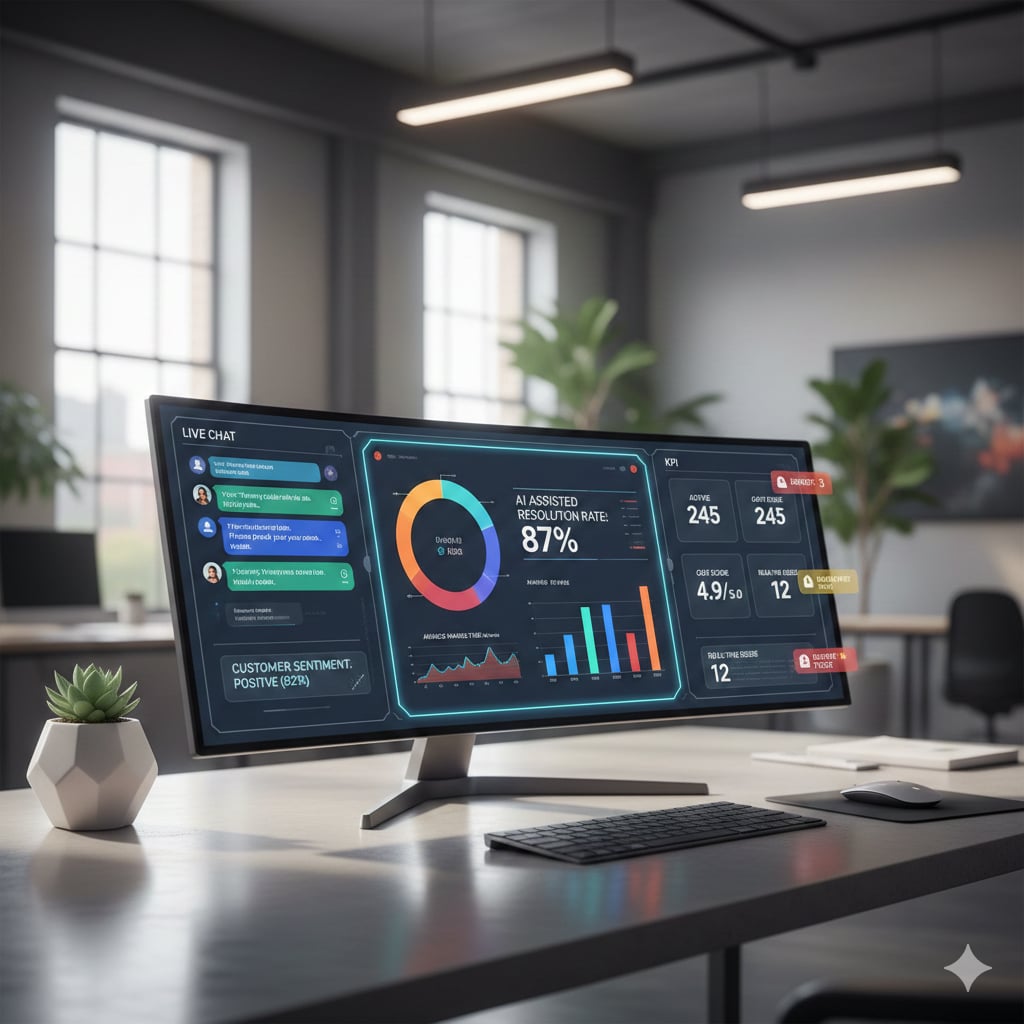

How Small Businesses Are Using AI To Compete With Larger Competitors And Win In 2026
For decades, large corporations had the advantage. They had bigger teams, larger marketing budgets, stronger infrastructure, and access to advanced technology. Small businesses were often forced to compete through hustle alone.
That advantage is shrinking fast.
Artificial intelligence has become the great equalizer. Today, small companies are using smart automation, predictive analytics, and AI driven systems to compete directly with larger competitors. In many cases, they are outperforming them.
If you are wondering how small businesses are using AI to compete with larger competitors, this guide will show you exactly how they are doing it and how you can apply the same strategies.
Why AI Is the Great Equalizer for Small Businesses
AI removes traditional limitations by:
- Automating repetitive tasks
- Improving decision making
- Personalizing customer experiences
- Reducing operational costs
- Increasing speed and accuracy
Large enterprises may have scale, but small businesses have agility. When agility meets AI powered systems, the competitive gap narrows dramatically.
Small companies can now deploy tools that were once available only to corporations with massive IT departments.
1. Automating Operations to Reduce Overhead
One of the most powerful ways small businesses compete is by automating manual processes.
AI can automate:
- Appointment scheduling
- Invoice processing
- Email follow ups
- Customer onboarding
- Inventory tracking
- Data entry
Instead of hiring additional staff, small businesses use automation to handle high volume repetitive tasks.
This keeps overhead low while maintaining professional execution.
For example, a small service based company can automate lead capture and qualification, allowing a two person team to handle what previously required five employees.
2. Delivering Enterprise Level Customer Support
Customer experience is where large corporations traditionally dominate.
Now, small businesses are using AI powered chat systems and smart response tools to provide:
- Instant customer replies
- 24 hour support
- Order tracking updates
- Personalized recommendations
Customers often cannot tell whether they are interacting with a small company or a major brand.
Fast response times build trust. AI makes that possible without expanding payroll.
3. Smarter Marketing Through Data Intelligence
Marketing used to favor large budgets. Today it favors smart data.
Small businesses are using AI to:
- Analyze customer behavior
- Optimize ad targeting
- Personalize email campaigns
- Predict buying patterns
- Improve conversion rates
Instead of guessing, they use predictive insights to allocate resources efficiently.
A small ecommerce brand, for example, can use AI to recommend products based on browsing history. This increases average order value without increasing ad spend.
Data driven marketing allows smaller companies to act with precision rather than volume.
4. Faster Decision Making
Large organizations often struggle with slow decision cycles.
Small businesses using AI dashboards and real time analytics can:
- Monitor performance instantly
- Identify trends early
- Adjust pricing dynamically
- Optimize inventory levels
- Forecast revenue more accurately
Speed becomes a competitive advantage.
While larger competitors navigate layers of approvals, agile small businesses pivot quickly using intelligent data insights.
5. Streamlining Hiring and HR Processes
Recruitment and employee management consume valuable time.
AI helps small businesses:
- Screen resumes automatically
- Schedule interviews
- Analyze candidate fit
- Manage onboarding documents
- Track employee performance
This creates efficiency without expanding HR departments.
For growing companies, this is critical. Scaling becomes structured instead of chaotic.
6. Competing with Personalization at Scale
One of the strongest advantages AI offers small businesses is personalized communication.
AI systems can:
- Customize product recommendations
- Personalize website experiences
- Trigger automated follow ups
- Send behavior based offers
Customers feel seen and understood.
Personalization was once resource intensive. Now it is automated and accessible.
7. Improving Financial Management
Cash flow management is critical for small businesses.
AI tools help by:
- Forecasting revenue
- Tracking expenses
- Detecting anomalies
- Automating payment reminders
- Generating real time financial reports
Better financial clarity reduces risk and improves long term stability.
Common Myths About AI for Small Businesses
Myth 1: AI Is Only for Big Companies
Modern AI tools are scalable and affordable.
Myth 2: Implementation Is Too Complex
With proper guidance, many automation systems can be deployed quickly.
Myth 3: AI Replaces Employees
AI removes repetitive tasks so employees can focus on higher value activities.
Frequently Asked Questions
1. Is AI expensive for small businesses
Many AI tools offer scalable pricing that fits small business budgets.
2. How quickly can small businesses see results
Operational automation often produces measurable improvements within weeks.
3. Do I need technical expertise
Not necessarily. AI consulting agencies can manage integration and training.
4. What is the safest starting point
Begin with repetitive workflows such as scheduling or reporting.
5. Can AI help local businesses
Yes. AI improves customer engagement, marketing targeting, and operational efficiency for local companies.
6. Is AI risky for small companies
When implemented strategically, AI reduces risk by improving decision accuracy and cost control.
The Competitive Shift Is Already Happening
The competitive landscape is changing.
Small businesses are no longer limited by team size or infrastructure. With AI powered systems, they operate lean, intelligent, and highly efficient.
The question is not whether AI will influence your industry.
The question is whether you will use it to compete or allow competitors to outpace you.
How small businesses are using AI to compete with larger competitors is not theoretical. It is happening daily across industries.
And the companies that act early gain the advantage.
Ready to Compete at the Next Level
If you want to implement AI strategically instead of experimenting with disconnected tools, expert guidance accelerates results and reduces risk.
Partner with Virtual Dominance
At Virtual Dominance, we help small and growing businesses:
- Identify high impact AI opportunities
- Design intelligent automation strategies
- Implement scalable systems
- Improve operational efficiency
- Increase revenue through smarter decision making
You do not need enterprise resources to compete like an enterprise.
You need the right strategy.
Book your strategy consultation with Virtual Dominance today and position your business for intelligent growth.
0 Comments
Be the first to comment on this article.
Please Login to continue.